
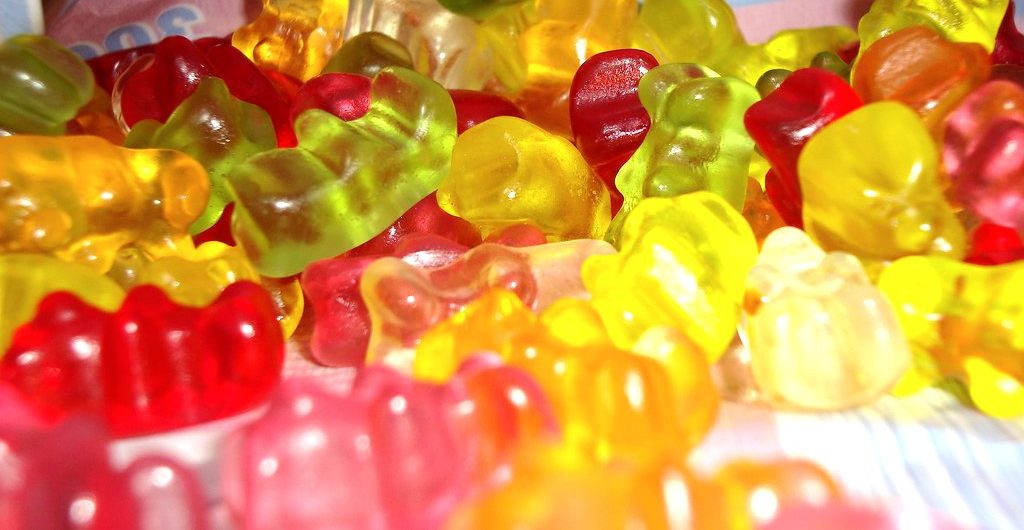
A shopper who reads “gelatin” on a gummy label and puts the bottle back has just decided your formulation for you. That moment is the whole pectin-versus-gelatin debate in miniature: a cost question, a texture question and a claims question rolled into one.
What makes it worth getting right is that the two bases fail in different ways, behave differently on a production line, and cost different amounts to run — and most of those differences only become visible after launch.
Cost: cheaper raw material is not the same as cheaper gummies
Gelatin is the cheaper base. It is abundant, processes predictably, and dominates non-vegan gummy production worldwide. Pectin carries a raw material premium, usually a meaningful percentage on top of the gelatin equivalent, and the gap narrows at high volume without ever closing.
Raw material is not the whole number, though. Three other cost lines move with the base:
- Setting and curing time. Gelatin sets quickly and predictably, which compresses the time between depositing and packing. Pectin gels need the right conditions to set properly and generally take longer to reach a stable state before they can be handled and packed. Days of difference in the factory translate into working capital and lead time.
- Process tolerance. A base that tolerates variation makes everything downstream cheaper — fewer rejected batches, fewer texture complaints, less rework. A base that is fussy consumes those savings in attention.
- Packaging and freight consequences. If the formulation decision pushes you toward better moisture or heat protection, that cost belongs to the formulation choice, not to the packaging budget.
Comparing only the ingredient line item is how brands end up surprised by unit cost.
Texture: the difference customers can taste and describe
Gelatin delivers the firm, elastic chew people associate with a traditional gummy. Pectin produces a softer, faster-melting bite with cleaner flavour release — the mouthfeel behind most premium plant-based brands.
This is not a nuance. Texture is one of the most-reviewed attributes of a gummy product, and the vocabulary customers use maps directly onto the base: “chewy”, “bouncy” and “tough” describe gelatin; “soft”, “melty” and “short” describe pectin. If your brand positioning promises a soft, clean-tasting chew, a gelatin base is working against the copy.
There is also a third base worth knowing about: starch. Many products sold as vegan gummies are starch-moulded rather than pectin-gelled, producing a softer, more confectionery-style bite. Starch sits between the two on cost, and its texture is distinct from both, so “vegan” does not tell you which of the two plant-based routes you are getting. If the mouthfeel matters, ask which base is actually proposed rather than accepting “vegan” as an answer.
Heat: the operational difference brands discover too late
This is where the two bases diverge most sharply, and where the cost of getting it wrong is highest.
Gelatin gels soften at temperatures close to body heat. That is not a defect — it is the property that makes the chew pleasant — but it means a gelatin gummy begins losing structure well before it looks damaged. In a warm warehouse, a hot delivery van or a closed container in summer sun, gelatin gummies fuse together in the jar, deform, and settle into a block. When they cool they do not fully recover.
Pectin tolerates heat considerably better, which is why it is the usual choice for e-commerce brands shipping into warm climates. Its weakness is the opposite: pectin is strongly hydrophilic, so it draws moisture from its surroundings, and that tendency accelerates in warm, humid conditions. The result is not melting but drift — a softer, stickier surface, faster sensory ageing, and a shorter practical shelf life in poor packaging.
The practical rule: gelatin fails by melting, pectin fails by absorbing. Both failures are manageable, and both are decided by formulation, packaging and shipping conditions — but they are managed differently, and they are managed before the first production run rather than after the first summer.
Claims: the part that is not a preference
- Vegan and vegetarian labels require pectin (or starch). Gelatin is animal-derived, and no amount of process control changes that.
- Halal and kosher considerations cut deeper than “gelatin or not”. Gelatin’s acceptability depends on its source and its certification — porcine gelatin is excluded under both, bovine gelatin depends on slaughter and certification, and fish gelatin has its own status. A brand selling into markets where these matter should establish the answer before choosing a base, because switching later means reformulating.
- Sugar-free works with both, but texture becomes harder without sugar, and pectin is the more usual base for low-sugar plant-based SKUs.
- Clean-label perception. Shoppers read pectin as a familiar plant ingredient and gelatin as an animal by-product. Whether or not that is fair, it is the reading that happens at the shelf.
What changes on the production line
Two operational consequences rarely make it into the comparison, and both affect cost and lead time.
Pectin is less forgiving to run. Its setting behaviour depends on the surrounding chemistry — the sugar, the acid, the mineral content and the water present — so a formulation change that would be routine in gelatin can require re-tuning in pectin. That is a real constraint on late-stage changes.
The two bases do not run on the same schedule. Setting, curing and drying times differ, which changes how a production line is booked and how quickly a batch can be packed. On a launch timeline this can matter more than the raw material cost.
None of this argues against either base. It argues for deciding early, and for asking your manufacturer what the base does to lead time rather than only to price.
Two failure modes that show up after launch
- Gelatin: fused and deformed product in warm months. Reviews turn to texture and appearance, returns rise, and the cause is a shipping condition the specification never modelled.
- Pectin: gradual moisture pickup. The product still passes potency testing while becoming softer and stickier, so quality control sees nothing wrong while customers notice the change.
Both are predictable. Both are cheaper to prevent in the specification than to fix in the market.
Making the call
A simple framework that holds up in practice:
- Gelatin for budget-driven SKUs, temperate distribution, and where the classic firm chew is the point.
- Pectin for vegan positioning, warm-climate e-commerce, sugar-free lines and premium mouthfeel.
- Both is a legitimate answer, and a common one: a gelatin value line and a pectin premium line, sharing brand equity and shelf presence.
The only genuinely wrong move is choosing before tasting samples of both. Mouthfeel settles this debate faster than any specification sheet, and it is the one variable a buyer can evaluate in ten seconds with the product in hand.
Red flags
- A recommendation made without asking about shipping climate — the variable that most often decides the answer.
- A vegan claim supported by “pectin” with no discussion of which pectin system and how it is set.
- Halal or kosher positioning with no documentation of gelatin source and certification, if gelatin is used at all.
- A formulation that cannot be changed late in the project, discovered only when you try to change it.
- A unit cost quoted without the packaging the base requires to hold its shelf life.
- Samples offered of only one base, when the decision is a comparison.
The version that matters
The base you choose is a positioning decision that happens to have a bill of materials attached. Vegan claims, warm-climate shipping, mouthfeel and price point all point at it — and they do not all point in the same direction, which is why the decision deserves a sample of each rather than an argument.
We formulate both bases on the same gummy production lines, so the comparison is made on one set of equipment rather than across two suppliers. Order pilot samples of each and decide on the bench, read how sugar-free and vegan claims really work, or see what shipping gummies into a warm market involves.
Related formulas
Directions we manufacture in this category — under your own brand, from 500–1,000 units. See all products →
How much active can a gummy actually carry?
A buyer recently asked how much active a single gummy can hold. The working number for a standard gummy is around 20% of the piece weight; higher loads are possible with encapsulation, which is arranged at formulation. What decides the answer is not the gummy but the daily dose divided by the pieces per day — we work that arithmetic with you before any quote is issued.
Manufacturing side: how we actually run this direction is on our pectin-gummies page.
New: we published a deeper guide on sugar-free pectin gummies and sweetener systems – maltitol vs allulose vs erythritol with stevia, and the questions to ask at sample stage.